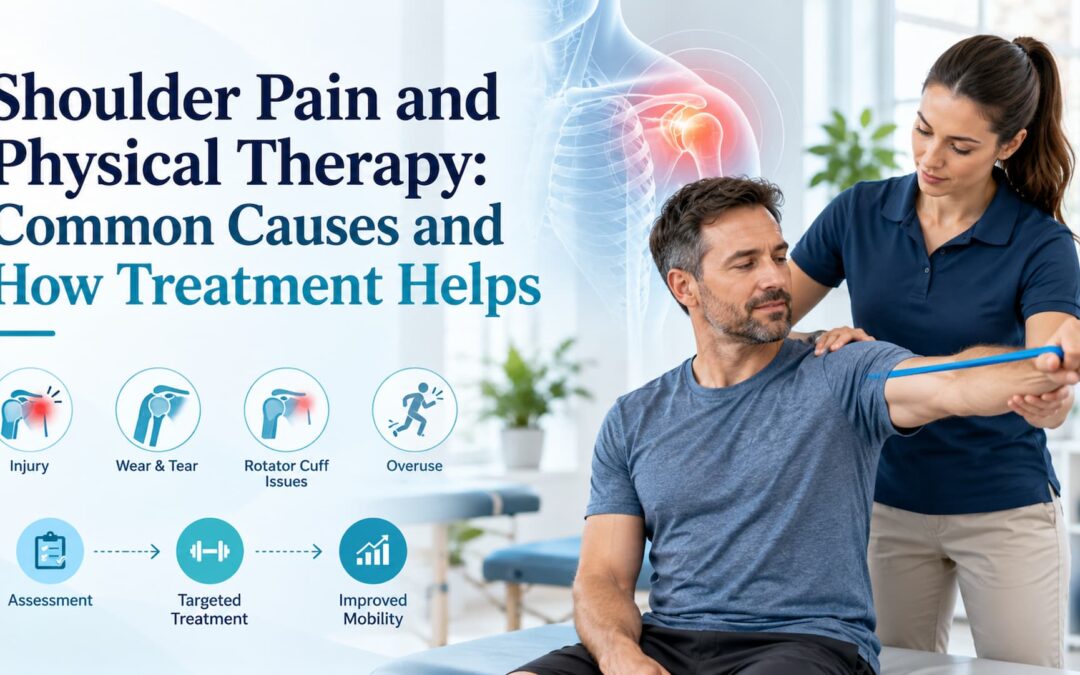
Shoulder pain can make simple things hard: reaching for a shelf, putting on a jacket, lifting a child or sleeping on your side. Because the shoulder has the widest range of motion of any joint in the body, it is also one of the easiest to strain. The good news is that many shoulder problems improve without surgery, and shoulder pain physical therapy is often a central part of that recovery. The MedlinePlus guide to shoulder injuries and disorders explains common causes of shoulder pain and provides information about available treatment options.
At Rapid Relief Medical Group in Plainfield, NJ, our licensed physical therapists treat shoulder pain from injuries, overuse, posture and surgery. Here is what you should know.
Common Causes of Shoulder Pain
Rotator cuff tendinitis and tears
The rotator cuff is a group of four muscles and tendons that keep the ball of the upper arm centered in the shoulder socket. These tendons can become irritated from repetitive overhead work or sports, or tear from a fall or with age. Common signs include pain when lifting or lowering the arm, pain at night when lying on that side, and weakness when raising or rotating the arm.
Shoulder impingement
When the space above the rotator cuff narrows, the tendons can get pinched each time you lift your arm. This often causes pain when reaching overhead or behind your back.
Frozen shoulder (adhesive capsulitis)
Frozen shoulder causes the capsule around the joint to tighten and thicken, slowly limiting movement. It often develops in stages over many months and is more common in people with diabetes and in people who have kept the arm still after an injury or surgery.
Posture-related shoulder pain
Long hours at a desk with rounded shoulders and a forward head can change how the shoulder blade moves. Over time, that can strain the shoulder and neck. Read more about how poor posture causes neck and back pain.
Arthritis and recovery after surgery
Arthritis can cause stiffness and aching in the shoulder, and patients recovering from rotator cuff repair or other shoulder surgery need guided rehabilitation to regain motion and strength.
How Physical Therapy Helps Shoulder Pain
According to the American Academy of Orthopaedic Surgeons, nonsurgical treatment relieves pain and improves function in about 80 to 85% of patients with rotator cuff tears. Physical therapy is a core part of that nonsurgical care. Your treatment plan depends on your evaluation, but it often includes:
A full evaluation
We look at how your shoulder, shoulder blade and neck move, test strength and range of motion, and ask how the pain affects your daily life and work.
Manual therapy and joint mobilization
Hands-on techniques help reduce stiffness and improve how the joint moves. Learn how joint mobilization and manual therapy and therapeutic exercise work together.
Strengthening the rotator cuff and shoulder blade muscles
Targeted exercises help the shoulder move with better control and less strain on irritated tendons. We progress exercises as your strength improves.
Stretching and range of motion
For stiffness and frozen shoulder, gradual stretching helps restore the motion you need for daily tasks.
Pain relief modalities
Depending on your needs, your therapist may use ultrasound, electrical stimulation, Kinesio taping or instrument-assisted soft tissue techniques alongside exercise.
A home exercise program
What you do between visits matters. We give you a simple routine to keep progress going at home.
Physical Therapy After Shoulder Surgery
After surgery such as a rotator cuff repair, rehabilitation follows a careful timeline set with your surgeon. Early phases protect the repair, and later phases rebuild motion and strength. Read more about post-surgery recovery at Rapid Relief.
Simple Tips While Your Shoulder Heals
- Avoid repeated overhead reaching and heavy lifting that cause pain.
- Do not keep the arm completely still for long periods unless your doctor tells you to. Gentle movement helps prevent stiffness.
- Set up your desk so your screen is at eye level and your elbows rest close to your body.
- Sleep on your back or on the opposite side, with a pillow supporting the sore arm.
When to See a Physical Therapist or Doctor
Schedule an evaluation if shoulder pain lasts more than a couple of weeks, keeps you up at night, or makes it hard to lift your arm. Seek medical care right away if the pain followed a fall or injury and you cannot lift your arm, if the shoulder looks deformed, or if shoulder pain comes with chest pain or shortness of breath.
Frequently Asked Questions
Can physical therapy fix a rotator cuff tear?
Physical therapy cannot heal a torn tendon back together, but it can relieve pain and restore function for many patients. The AAOS reports that nonsurgical treatment helps about 80 to 85% of patients with rotator cuff tears.
How long does physical therapy for shoulder pain take?
It depends on the cause and severity. Many patients notice improvement within several weeks, while frozen shoulder and post-surgical rehab usually take longer.
Do I need a referral for physical therapy in New Jersey?
Requirements can depend on your insurance plan. Call our office and we can help you check what your plan needs.
Should I rest my shoulder completely?
Short rest from painful activities can help, but keeping the shoulder completely still for too long can lead to stiffness. A therapist can show you which movements are safe.
Shoulder Pain Physical Therapy in Plainfield, NJ
Rapid Relief Medical Group is owned and run by physical therapists Khyati Shah, P.T., and Kinjal Patel, P.T. We create one-on-one treatment plans for shoulder, neck, back and joint pain. Learn more about physical therapy in Plainfield, NJ.
Call (908) 941-4762 or visit us at 1280 Randolph Rd, Suite 105, Plainfield, NJ 07060. Office hours are Monday to Friday, 9:00 am to 4:30 pm.