Manual Therapy in Plainfield NJ
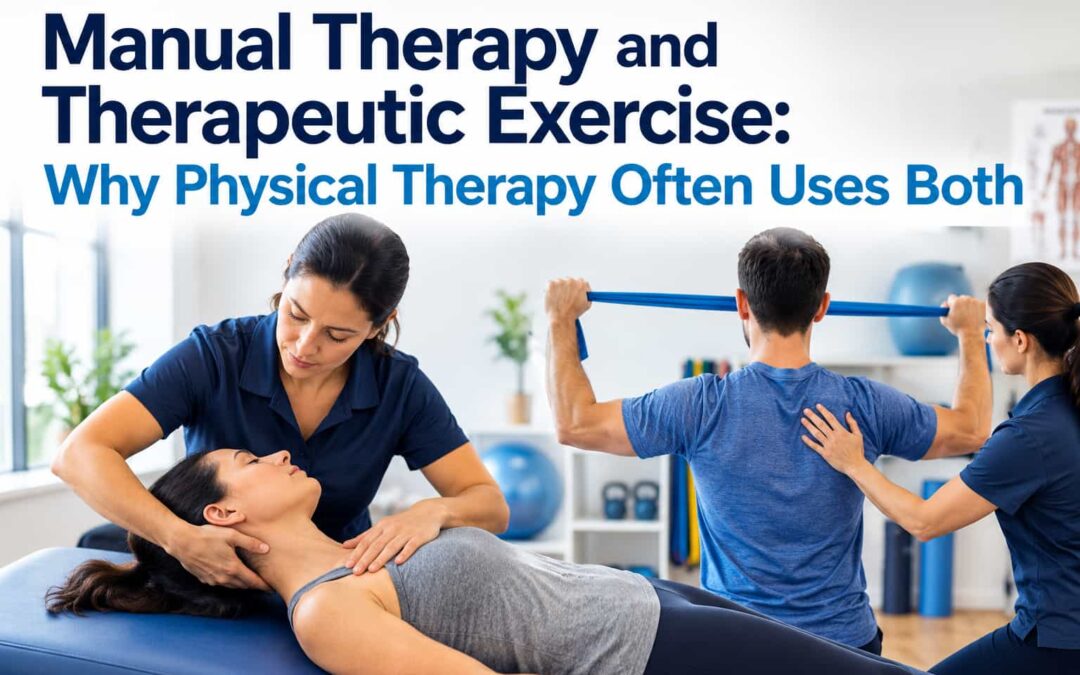
When pain, stiffness, or limited mobility makes everyday movement difficult, treatment shouldn’t necessarily focus on only one technique. Manual therapy and therapeutic exercise can be used together in physical therapy to address mobility limitations while progressively improving strength, movement, and function. Resources from the American Physical Therapy Association (APTA) provide information about physical therapy and rehabilitation, supporting the use of individualized approaches based on a patient’s movement and functional needs.
At Rapid Relief in Plainfield, NJ, manual therapy in Plainfield, NJ can be incorporated into a physical therapy treatment plan and individualized according to a patient’s symptoms, functional limitations, evaluation findings, and rehabilitation goals.
What Is Manual Therapy?
Manual therapy refers to hands-on techniques that a physical therapist may incorporate into a rehabilitation program.
Depending on the patient’s condition and clinical evaluation, these techniques may be used to address restrictions in movement, joint mobility, or soft tissues.
Manual therapy isn’t simply about providing temporary comfort.
When appropriately incorporated into physical therapy, it can be part of a larger strategy designed to help patients move more comfortably and participate in active rehabilitation.
What Is Therapeutic Exercise?
Therapeutic exercise consists of specific movements and exercises selected according to a patient’s individual needs.
Unlike a general workout routine, therapeutic exercises are typically chosen to address identified functional limitations.
They may focus on:
- Strength
- Flexibility
- Range of motion
- Balance
- Coordination
- Mobility
- Movement control
- Muscular endurance
- Functional movement
- Tolerance for everyday activities
Exercises can also be modified as the patient progresses.
The objective isn’t simply to complete a certain number of repetitions. The exercises should contribute toward meaningful functional goals.
Manual Therapy vs. Therapeutic Exercise: Which Is Better?
Patients sometimes assume they have to choose between hands-on treatment and exercise.
In reality, the more useful question is:
How can each approach contribute to the patient’s rehabilitation goals?
Manual therapy may be incorporated to address certain movement or mobility limitations, while therapeutic exercise gives patients an active role in developing strength, control, mobility, and physical capacity.
Consider the difference:
| Manual Therapy | Therapeutic Exercise |
|---|---|
| Hands-on treatment | Active rehabilitation |
| May address mobility restrictions | Builds strength and movement capacity |
| Can include joint mobilization | Can improve functional movement |
| Selected according to evaluation findings | Progressed according to patient ability |
| May help prepare for movement | Helps reinforce movement through activity |
These approaches don’t necessarily compete with each other.
They may complement each other within an individualized physical therapy program.
What Is Joint Mobilization?
Joint mobilization is a manual therapy technique that physical therapists may use when appropriate.
It involves controlled movements applied to a joint with the goal of addressing mobility restrictions and improving movement.
For example, someone experiencing neck stiffness may have difficulty comfortably turning their head while driving. Another patient may have limited shoulder movement that makes reaching overhead difficult.
A physical therapist can evaluate the patient’s mobility and determine whether joint mobilization may be appropriate as part of treatment.
Importantly, joint mobilization isn’t automatically appropriate for every patient or every painful condition.
Clinical evaluation matters.
Why Exercise Is Important After Hands-On Treatment
One of the most important concepts in rehabilitation is that feeling better during a treatment session and improving long-term function aren’t necessarily the same thing.
Hands-on therapy may help address certain movement restrictions, but active rehabilitation can help patients build the strength and physical capacity needed outside the clinic.
Think of rehabilitation as a progression:
Improve movement → Reinforce movement → Build strength → Increase activity tolerance → Return to everyday activities
For example, if someone experiences difficulty bending because of lower-back discomfort, treatment might initially focus on improving comfortable movement.
Therapeutic exercises can then progressively help the patient develop the strength and control required for bending, lifting, working, exercising, or performing other activities.
Physical Therapy Should Address Function, Not Just Pain
Pain is important, but it isn’t the only thing physical therapists evaluate.
Consider two patients who both report neck pain.
Patient A
Experiences discomfort primarily after sitting at a computer for several hours.
Patient B
Experiences difficulty turning their head while driving.
Both patients report neck pain, but the functional problems are different.
Their physical therapy programs shouldn’t automatically be identical.
An individualized evaluation can examine mobility, strength, movement, functional limitations, and other relevant factors before establishing treatment goals.
Manual Therapy for Back Pain
Lower-back discomfort is one reason patients may seek physical therapy.
Depending on the evaluation, treatment may incorporate manual therapy alongside therapeutic exercises designed to improve movement, strength, mobility, and tolerance for activity.
A therapist may also look beyond the painful area.
Factors involving hip mobility, strength, movement patterns, occupational demands, or other functional limitations may be relevant depending on the individual.
The goal isn’t simply:
“Make the back stop hurting today.”
A more complete rehabilitation question is:
“What does this person need to be able to do comfortably again?”
That could mean returning to work, exercising, lifting, walking longer distances, playing with children, or performing normal household activities.
Manual Therapy for Neck Pain and Stiffness
Neck pain and stiffness can interfere with working, sleeping, exercising, and driving.
A physical therapist may evaluate:
- Neck range of motion
- Strength
- Functional movement
- Mobility restrictions
- Activities that aggravate symptoms
- Work or daily activity demands
When appropriate, manual therapy or joint mobilization may be incorporated alongside therapeutic exercises.
The rehabilitation program can then progress according to how the patient responds.
Why Personalized Physical Therapy Matters
There isn’t one exercise, stretch, or manual therapy technique that works for every person experiencing back or neck discomfort.
That’s why evaluation comes before treatment.
A useful rehabilitation process may look like this:
1. Evaluate symptoms and function
↓
2. Identify mobility and strength limitations
↓
3. Establish functional goals
↓
4. Select appropriate treatment techniques
↓
5. Introduce therapeutic exercise
↓
6. Progress strength and movement
↓
7. Reassess
↓
8. Work toward returning to normal activities
This approach allows treatment to evolve rather than remaining the same from the first appointment to the last.
What Should Progress in Physical Therapy Look Like?
Progress shouldn’t necessarily be measured only by asking:
“Does it hurt less?”
Pain is certainly important, but functional improvement can provide additional information.
Depending on the patient’s condition, therapists may look for improvements such as:
- Greater range of motion
- Improved strength
- Better walking tolerance
- Increased ability to stand or sit
- Improved ability to bend or lift
- Greater confidence with movement
- Improved tolerance for work activities
- Ability to return to exercise
- Improved ability to perform daily activities
These functional measurements help determine whether the rehabilitation program is moving the patient toward meaningful goals.
When Should You Consider Physical Therapy?
Consider seeking an appropriate healthcare evaluation when pain, stiffness, weakness, or movement limitations continue interfering with normal activities.
For example, physical therapy may be worth discussing when you repeatedly have difficulty:
Walking → Sitting → Standing → Bending → Lifting → Exercising → Working → Driving → Performing everyday activities
Rather than simply waiting for the problem to disappear, an evaluation can help determine what functional limitations may need to be addressed.
Symptoms following significant trauma or symptoms involving substantial weakness, numbness, neurological changes, or other concerning signs should receive appropriate medical evaluation.
Building Independence Is an Important Part of Rehabilitation
The ultimate objective of physical therapy shouldn’t be to make someone permanently dependent on treatment.
A successful rehabilitation program should help patients understand their movement, progressively improve their abilities, and become more capable of managing everyday physical demands.
Manual therapy may play an important role during that process.
Therapeutic exercise may also play an important role.
But the bigger goal is better function and greater independence.
At Rapid Relief, physical therapy can combine appropriate hands-on treatment with active rehabilitation based on each patient’s individual evaluation, limitations, and goals.
Looking for Manual Therapy and Physical Therapy in Plainfield, NJ?
If back pain, neck pain, stiffness, weakness, or limited mobility is interfering with your everyday activities, Rapid Relief offers physical therapy and rehabilitation services in Plainfield, New Jersey.
A physical therapy evaluation can help identify mobility and functional limitations and determine an appropriate rehabilitation strategy based on your individual needs.
Contact Rapid Relief
Phone: 908-941-4762
Office: 1280 Randolph Rd, Suite 105
Plainfield, NJ 07060
Email: therapy@rapidreliefpt.com
Website: https://rapidreliefpt.com/